Bremen Workshop on Light Scattering 2027
Bremen Workshop on Light Scattering 2027
Leibniz-Institut für Werkstofforientierte Technologien - IWT, Bremen, Germany
15 + 16 March 2027
Registration by sending title of talk: 10 Feb. 2027
LATEX and LyX template for abstracts. Deadline: 1 March 2026
Fee
There will be no fee with this workshop.
Preliminary program
...
Preliminary list of talks
Mie Theory Calculator
Mie Theory Calculator
This is a web tool for exact electromagnetic scattering calculations. Various problems can be simulated such as Sphere on substrate, Two spheres, Arrays, Focused beam.
- Link (9 Oct 2026)
Scattering Core
Scattering Core
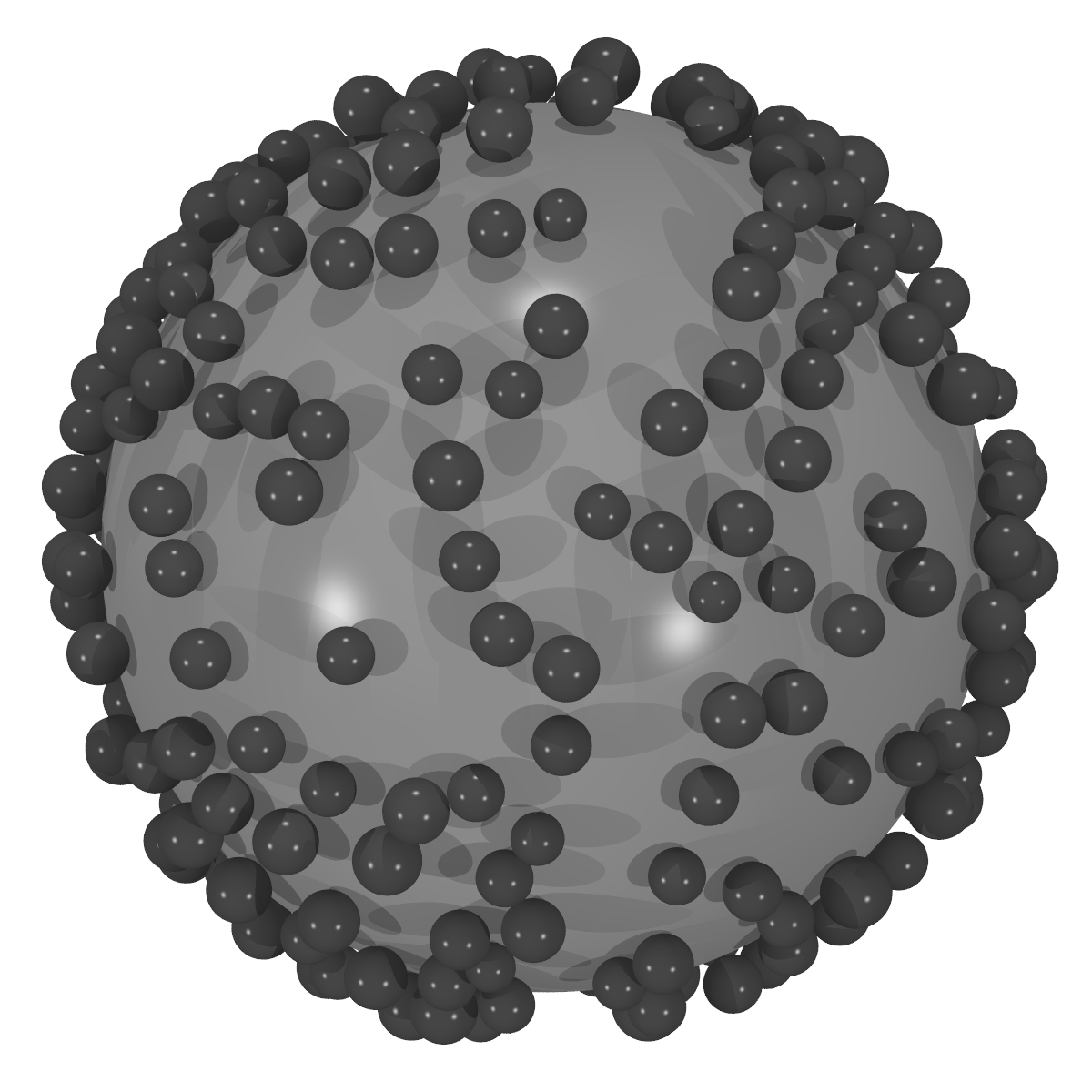
Scattering Core is a highly optimized Java library designed for the generation and morphological analysis of synthetic fractal aggregates.
- Link (9 Oct 2026)
ELS22
22nd Electromagnetic and Light Scattering (ELS XXII)
The conference will in Saariselkä, Finland, in January 10-15, 2027.
ELS XXII will bring together researchers from around the world to discuss the latest theoretical, computational, and experimental advances in electromagnetic and light scattering by particles of arbitrary size, shape, composition, and internal structure.
- Link (13 Sep 2026)
PyMieSimX
PyMieSimX by Martin Poinsinet de Sivry-Houle provides a web-based interface for configuring optical sources, scatterers, and detectors, running parameter sweeps, exploring individual particles, visualizing scattering and near-field representations, and exporting results. PyMieSimX is built on top of PyMieSim, which provides the underlying scientific calculations.

PyMultiLab
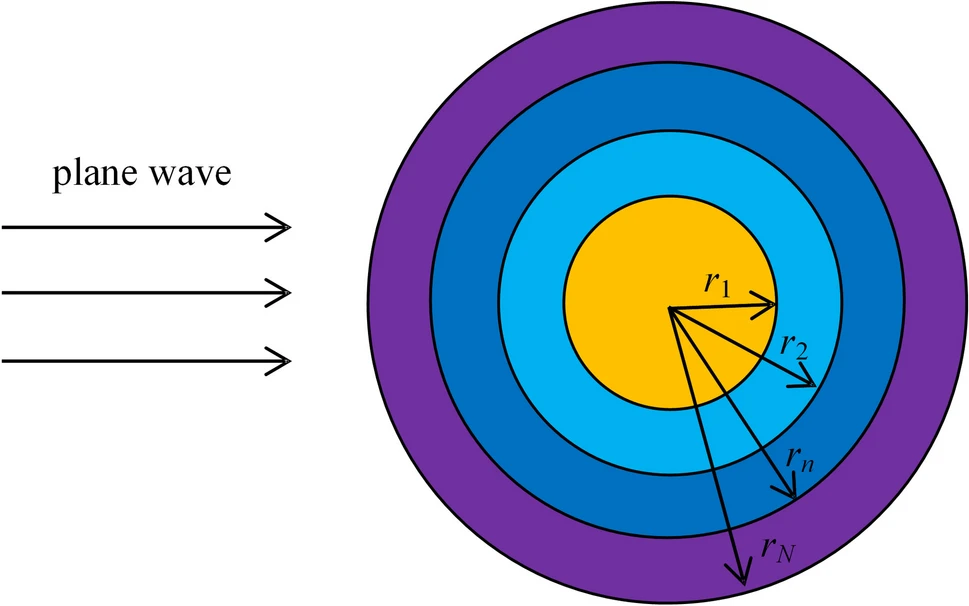
A software called PyMultiLab which can calculate the electromagnetic properties of multilayered spherical particles.
CPDDA
CPDDA: A Python Package for Discrete Dipole Approximation Accelerated by CuPy. CPDDA is object-oriented and provides two modes of operation: CPU and GPU. It can be used to simulate the light scattering and absorption properties of arbitrarily shaped particles.